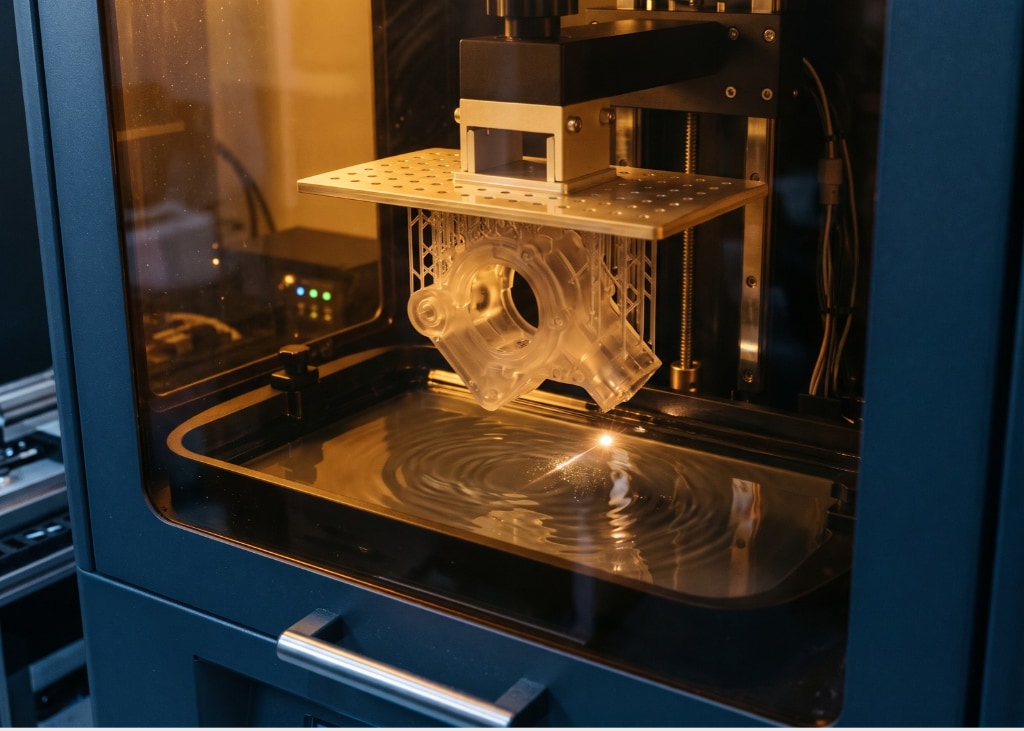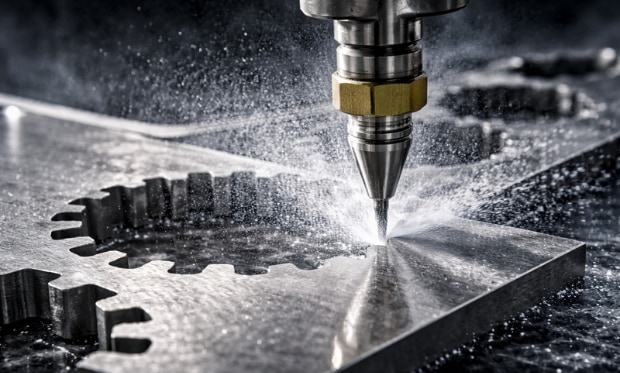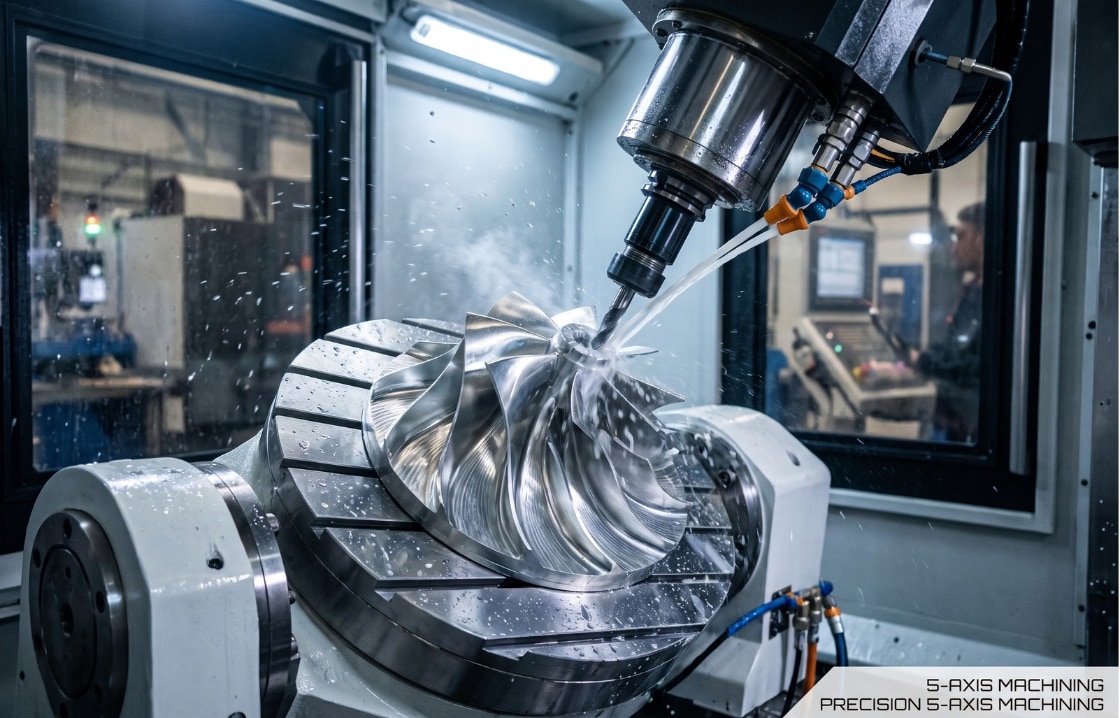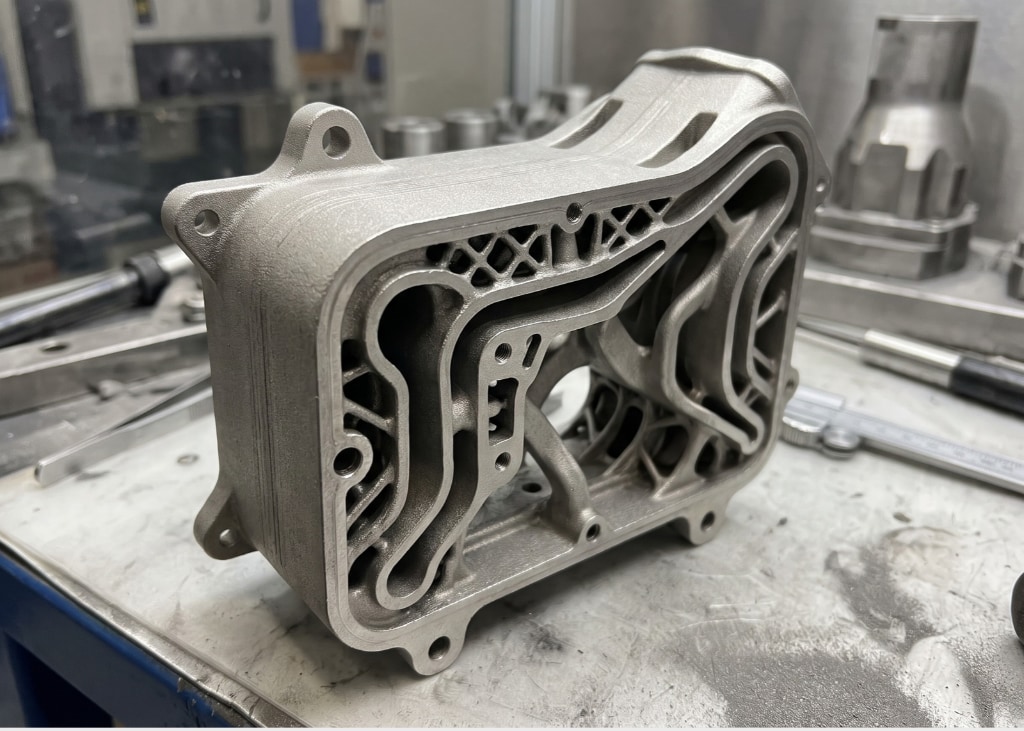
The manufacturing industry is experiencing a historic transformation at the intersection of digitalization and advanced engineering applications. While traditional subtractive (machining) and formative (casting, forging) production methods have been the backbone of the industry for centuries, the increasing need for complex geometries, lightweight designs, and rapid prototyping has necessitated next-generation production technologies. At the center of this revolution are metal 3d printing (additive manufacturing) technologies. Initially used only for plastic prototypes, this technology has today become a standard procedure for producing direct end-use metal parts in critical sectors such as aerospace, automotive, medical, and heavy industry.
Metal additive manufacturing is based on the principle of creating physical parts by processing metal powders or wires layer by layer, starting from a digital CAD (Computer-Aided Design) model. In today's highly competitive global landscape, industrial 3D printing applications offer unique advantages that reduce part weight while increasing structural integrity, shortening the supply chain, and minimizing material waste. With our experience in the manufacturing sector at Snijer, we will examine in detail the most preferred metal 3D printing methods in the industry, their working principles, and how these technologies are determining future production standards.
1. Selective Laser Melting (SLM)
Selective Laser Melting (SLM) is one of the most widely used powder bed fusion technologies for industrial metal part production today. In this method, the production process begins with spreading a thin layer of metal powder (typically 20-60 microns thick) onto a build platform. Then, a high-power fiber laser scans the cross-section of that layer from the digital model, completely melting and fusing the metal powder. Once the layer is complete, the platform lowers slightly, a new powder layer is spread, and this cycle continues until the part is finished.
The biggest advantage of the SLM method is that the parts have almost 100% full density. This ensures that the mechanical properties (tensile strength, hardness, etc.) of parts produced with SLM are equivalent to, or due to microstructural homogeneity sometimes superior to, traditional cast or machined parts. It is highly successful in processing alloys such as aluminum, titanium, stainless steel, and cobalt-chrome. It is frequently preferred for producing lightweight engine parts in the aerospace sector and complex exhaust manifolds in the automotive sector in a single run.
2. Direct Metal Laser Sintering (DMLS)
The DMLS method is almost identical to SLM in terms of basic working principles and hardware infrastructure; both are laser-based powder bed fusion technologies. However, the fundamental difference lies in how the powdered material is processed. While SLM completely melts powders consisting of a single element or a full alloy, the DMLS method typically uses powders composed of a mixture of metals with different melting points, and the laser "sinters" these powders by heating them just enough to fuse them at the molecular level rather than melting them completely.
Thanks to advancing laser technologies today, these two terms are often used interchangeably in the industry. DMLS plays a critical role in processing highly heat-resistant superalloys like Inconel and mold steels. "Conformal cooling channels" integrated into injection molds are one of the biggest success stories of DMLS technology. These channels, which are impossible to drill with a traditional drill and curve along the inner surface of the mold, dramatically shorten the part cooling time and increase factory efficiency.
3. Electron Beam Melting (EBM)
Electron Beam Melting (EBM) is another powder bed method that uses a high-energy electron beam instead of a laser as the heat source. The EBM process utilizes electromagnetic coils to deflect and focus the electron beam, providing a much faster scan speed compared to laser systems. Additionally, the EBM process is carried out in a high vacuum environment and at very high temperatures (700°C - 1000°C).
The vacuum environment creates a perfect atmosphere for processing materials like titanium, which are highly reactive to oxygen and can easily oxidize. The high ambient temperature almost completely eliminates residual stresses that may occur on the part during production; therefore, parts produced with EBM generally do not require an additional stress-relieving heat treatment like SLM parts. In the field of industrial 3D printing, EBM has a unique advantage, especially in the medical sector (custom titanium orthopedic implants, cranial prostheses) and in the mass production of demanding parts like turbine blades in the aerospace industry.
4. Binder Jetting
Binder Jetting is the 3D printing method that most closely resembles traditional paper printers in terms of working logic. A laser or electron beam heat source is not used in this technology. Instead, a liquid binder agent is sprayed onto the spread metal powder via a printhead. The binder agent is deposited only where the part should be, according to the digital model's cross-section, gluing the metal particles together.
After the part is built layer by layer in this manner, the resulting structure is called a "green part." The green part is quite fragile and must be subjected to a sintering process in furnaces (or an infiltration process with a different metal like bronze) to gain a fully metallic structure. During the heat treatment, the binder evaporates, and the metal powders fuse together.
The greatest strength of Binder Jetting is its speed and production volume. Instead of waiting for a laser to scan a point, a wide printhead can pass over the entire layer in seconds. For this reason, it presents a serious cost and speed alternative to casting or machining in the mass production of tens of thousands of small and complex metal parts (e.g., automotive sensor housings, small mechanical fasteners).
5. Directed Energy Deposition (DED)
Directed Energy Deposition (DED) is a completely different concept from powder bed methods. In this system, metal powder or wire is fed directly into the build area via a nozzle and is instantly melted and deposited onto the surface by a high-power laser or electron beam focused precisely on that point. It is usually integrated onto the end of 4 or 5-axis robotic arms or modified CNC machines.
DED systems are used for the production of very large-scale parts or the repair of existing parts rather than producing small and precise parts from scratch. For example, a massive, worn-out ship propeller or a broken, expensive piece of mining equipment can be repaired by milling the damaged area and then filling it in from scratch using the DED method. DED, which is much more precise than traditional welding methods and can print different metal alloys simultaneously (gradient materials), forms the basis of the hybrid manufacturing (machines capable of both CNC machining and 3D printing) concept.
The Role of Metal 3D Printing in Future Production Standards
Metal additive manufacturing technologies are building blocks at the heart of the Industry 4.0 transformation. Eliminating the constraints of "Design for Manufacturing," these methods give engineers the freedom of "Design for Additive Manufacturing." Metal 3d printing, which reduces part counts, eliminates assembly times, and minimizes material consumption through topology optimization, also plays a critical role in achieving sustainable production goals.
Furthermore, the ability to create digital libraries instead of stocking physical spare parts and start production instantly with a 3D printer anywhere in the world provides industries with great flexibility against global supply chain crises.
To optimize your manufacturing processes, reduce your production costs, and prepare your factory for the future with innovative solutions offered by digital production technologies, you can get in touch with our expert team. You can simply contact us to get detailed information about our advanced production solutions and consultancy services.
Frequently Asked Questions (FAQ)
What is the surface quality of parts produced with metal 3D printing methods?
Parts emerging after metal 3D printing processes generally have a slightly sandy surface texture (Ra values vary depending on the method used but are typically between 5 and 20 microns). In cases where precise tolerances or a flawless surface are required, parts are subjected to traditional post-processing methods such as CNC machining, sandblasting, electropolishing, or tumbling to make them smooth.
Is it possible to use different metal 3D printing methods (e.g., SLM and DED) in the same project?
Yes, this is possible and is an increasingly common approach in the industry. While core structures with complex and precise internal details are produced with high precision using powder bed methods like SLM or DMLS, when a very large attachment or a different alloy needs to be added to these structures, DED systems can be used to build a faster and rougher structure. These hybrid approaches optimize part production time and cost.
Why are support structures mandatory in industrial metal 3D printing?
In powder bed systems (SLM, DMLS, EBM), powerful thermal stresses occur as the metal melted by the laser rapidly cools. Support structures are vital not only to keep the overhanging parts suspended in the air but also to prevent the part from warping and experiencing thermal distortion by transferring the extreme heat from the melt pool away from the part to the build platform. After production is finished, these supports are cut and separated from the part using machining methods.